NATIONAL GUIDE FOR COMMERCIAL PROPERTIES
Commercial Water Damage Restoration: From First Response to Return to Operations
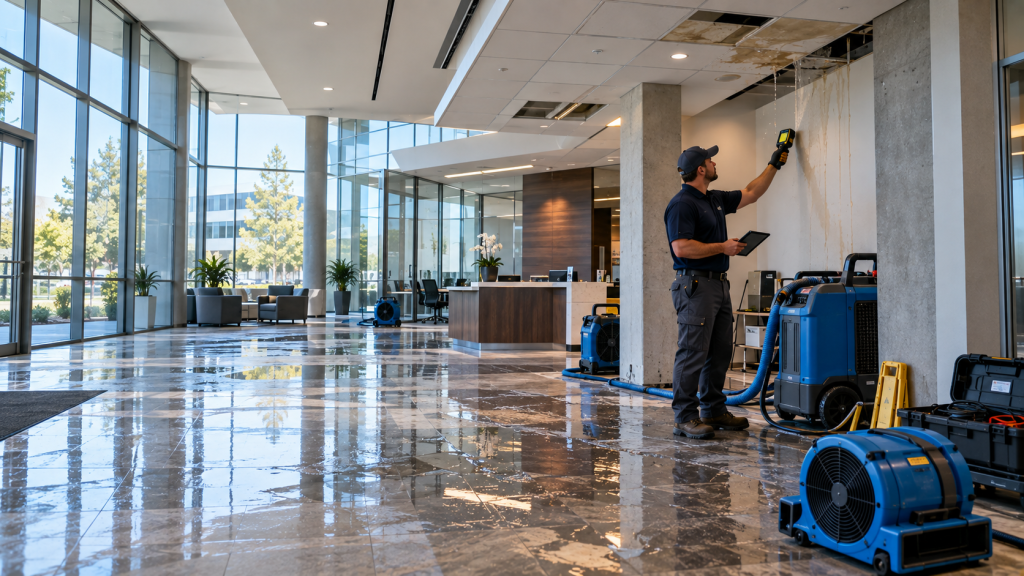
Removing visible water is only the first step. Commercial water damage restoration also means finding hidden moisture, drying the building, evaluating materials and planning the work so the property can get back to business.
01
Assessment
02
Water Extraction
03
Moisture Mapping
04
Structural Drying
05
Damage Evaluation
06
Return to Operations
OVERVIEW
When Water Disrupts a Commercial Property
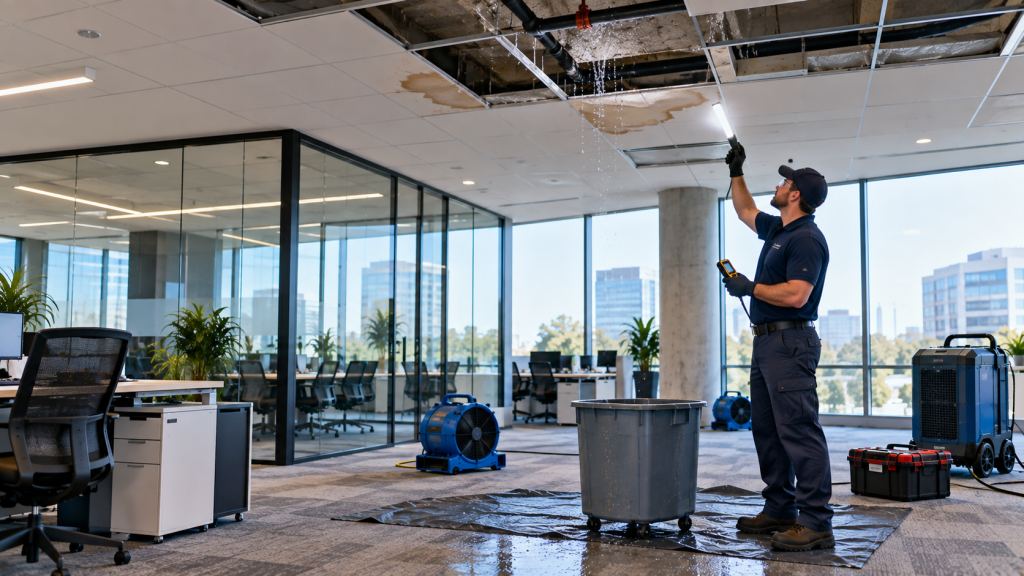
A burst pipe above a ceiling, a failed sprinkler head, a roof leak after a storm or a flooded loading dock can each stop normal operations within minutes. The visible puddle is rarely the whole problem. Water moves through floors, wall cavities, ceiling assemblies and building systems, and it can reach areas far from where it started.
Commercial water damage restoration is the coordinated process of stopping the damage from spreading, removing water, drying the structure and contents, evaluating what was affected and planning repairs. For property owners, facility managers and business operators, the goal is not only a dry building. It is a property that can be used again, with the work documented along the way.
No two losses are alike. What a project requires depends on the water source, how long water was present, the materials involved, the building’s systems and the way the space is used. This site explains the lifecycle so you can ask better questions and make better decisions, whichever restoration professionals you work with.
RESTORATION GUIDES
Commercial Water Damage Restoration Services
The first hours matter most. This guide covers initial assessment, source control considerations, protecting occupants and contents, and what to communicate and document while the situation is still developing.
Standing water is removed first, but drying the building is what determines whether hidden moisture is resolved. Learn how moisture mapping, air movement and dehumidification fit together and how progress is monitored.
Floodwater and storm intrusion raise different questions from a clean plumbing leak, including contamination, building conditions and the scale of the response.
An office, a restaurant, a warehouse and a medical facility do not dry, reopen or phase work the same way. This hub explains how the property shapes the plan.
SOURCES OF WATER
Common Causes of Commercial Water Damage
Plumbing failures
Burst or leaking supply lines, failed fittings, clogged drains and sewer backups.
Fire sprinkler discharge
Accidental activation, damaged heads or system failures.
Roof and envelope leaks
Storm damage, failed flashing, clogged drains on flat roofs and window or wall intrusion.
HVAC and equipment leaks
Condensate lines, chillers, boilers, water heaters and ice machines.
Flooding and groundwater
Heavy rainfall, overflowing waterways, poor site drainage and rising groundwater.
Multi-floor migration
A leak on an upper floor that travels through ceilings and walls into several tenant spaces.
Slow, hidden leaks can be as damaging as sudden ones. They may go unnoticed until stains, odors, warped materials or elevated humidity draw attention. A professional evaluation at the property is the way to determine what is actually happening.
PROPERTY-SPECIFIC PLANNING
Restoration Across Commercial Property Types
Water damage in an open-plan office is a different planning problem from water damage in a commercial kitchen, a cold-storage warehouse or a hospital wing. Occupancy, sensitive equipment, inventory, regulatory expectations and the need to keep operating all change the approach.
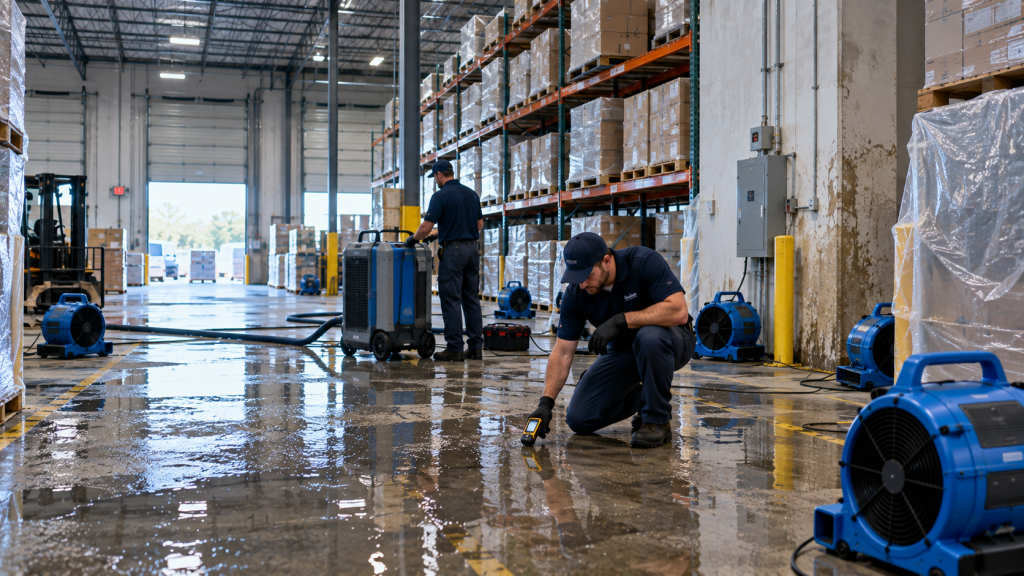
The property-type guide covers offices, retail stores, restaurants, hotels, warehouses, industrial facilities, medical facilities, multifamily properties, mixed-use buildings, educational properties and commercial campuses. For each, it explains typical water-loss scenarios, sensitive contents and systems, access and occupancy considerations, and the business continuity concerns that shape the schedule.
THE LIFECYCLE
The Restoration Process at a Glance
1
Assessment
Understand the situation, the source and the affected areas.
2
Source and migration review
Confirm the source is controlled and trace where water has traveled.
3
Water extraction
Remove standing water and excess moisture.
4
Moisture evaluation and mapping
Measure and record moisture so hidden wet areas are identified.
5
Drying
Use air movement and dehumidification, with monitoring, to dry structure and contents.
6
Material and damage evaluation
Decide what can be dried in place, cleaned or must be removed.
7
Restoration planning and reconstruction coordination
Scope the repairs where they are needed.
8
Final inspection and return to operations
Confirm conditions and hand the space back.
The commercial water damage recovery process guide explains each stage in detail.
WHY IT IS DIFFERENT
Why Commercial Restoration Needs Specialized Planning
Commercial buildings are larger, more complex and more heavily used than most homes. That changes the work in several ways.
Good planning balances speed with thoroughness. Drying a building too little, or declaring it finished too early, can leave moisture behind materials that then cause problems later. Conditions and risks vary by property, which is why an on-site evaluation by qualified professionals matters.
Scale and systems
Multiple floors, shared walls, ceiling plenums, raised floors, mechanical rooms and electrical equipment mean water can reach many places.
Materials
Commercial finishes such as suspended ceilings, carpet tile, gypsum board, concrete and specialty flooring respond to moisture differently.
Multiple stakeholders
Owners, tenants, property managers, insurers, contractors and sometimes regulators all have a stake in decisions.
Time pressure
Every day a space is unusable can mean lost revenue, displaced staff or missed obligations.
KEEPING THE BUSINESS RUNNING
Business Continuity Considerations
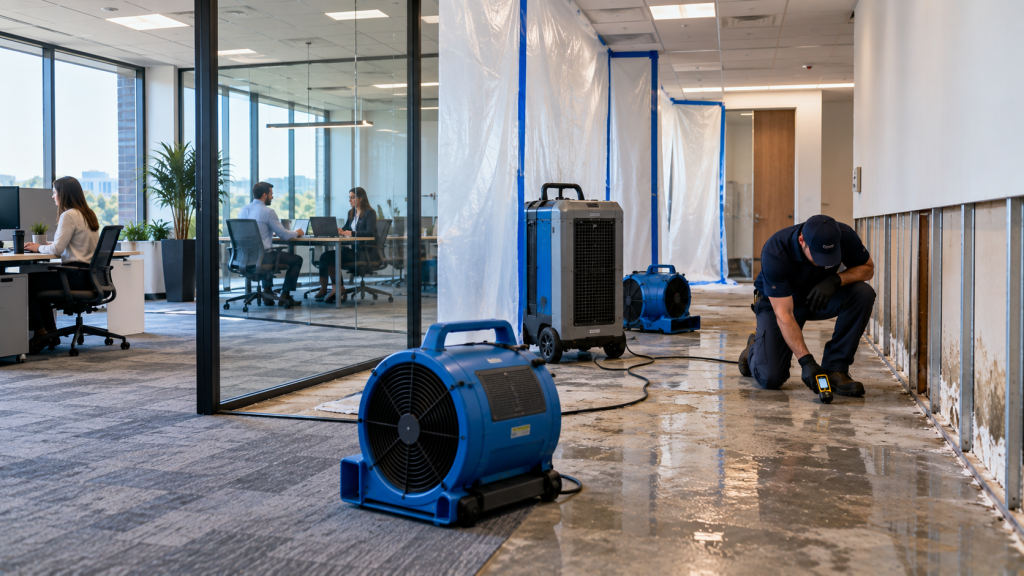
Restoration and operations often need to happen in the same building. Early conversations should cover:
- Which areas must reopen first and which can wait.
- Whether unaffected areas can stay in use, and how they will be protected from dust, noise and moisture.
- Access routes, working hours, elevators, loading areas and security requirements.
- Critical equipment, inventory and records that need protection or relocation.
- Whether phased restoration is practical, so parts of the property can return to use sooner.
In some situations a space cannot safely or practically remain in use during restoration. That is a decision for the responsible parties and qualified professionals after the conditions are evaluated.
RECORDS AND UPDATES
Documentation and Communication
Documentation
Clear records make every later decision easier. Useful documentation includes photographs and video of the affected areas, notes on when the water was discovered and stopped, moisture readings and their locations, equipment placement, daily progress records and a list of affected materials and contents.
Communication
Communication matters just as much. Owners, tenants, property managers and insurers usually need consistent updates on scope, schedule and access. Insurance coverage and claim outcomes depend on the policy and the insurer, so questions about coverage should go to the insurance carrier or adviser rather than being assumed.
QUESTIONS
Frequently Asked Questions
If anyone is in danger, or if there are electrical hazards, gas odors or structural concerns, call 911 and keep people out of the area. If it is safe to do so, stop the source of water where you can, protect valuables and documents from further exposure, photograph the damage and contact a qualified restoration professional and your property manager or insurer. Do not enter areas where water may be in contact with electrical equipment.
An assessment looks at the water source, how far water has traveled, the materials affected and the building systems involved. Moisture meters and thermal imaging are often used to find moisture that cannot be seen. Findings guide the extraction, drying and repair plan.
Extraction removes standing water, but building materials can still hold moisture. Structural drying uses air movement and dehumidification, with monitoring, to bring materials back toward acceptable moisture levels. Skipping this step can leave hidden moisture behind walls and under floors.
Sometimes. It depends on the extent of the damage, safety considerations, the layout of the property and how work areas can be isolated. Some properties reopen in phases. The decision should be made after the conditions are evaluated by qualified professionals.
There is no single timeline. Duration depends on the water source, the amount of water, the materials, the building’s systems, environmental conditions and whether reconstruction is needed. Drying is verified by measurement, not by a fixed number of days.
Reconstruction is needed when materials cannot be restored to an acceptable condition, or when they had to be removed to allow drying or cleaning. The scope varies from replacing ceiling tiles to rebuilding finishes across whole areas.
It depends on the policy, the cause of the loss and the insurer’s determination. This site cannot say whether a particular loss is covered. Review your policy and speak with your insurer or broker, and document the damage carefully.
Need Help Planning Your Commercial Water Damage Restoration?
Gather the key facts about your property, the water source and your timeline so any restoration conversation starts with clear information.