Home › Extraction & Drying
WATER REMOVAL AND STRUCTURAL DRYING
Commercial Water Extraction and Structural Drying
After standing water is removed, the building is still wet. Learn how commercial water extraction, moisture mapping, air movement and dehumidification work together to dry a property, and how progress is monitored.
Why Drying Is More Than Removing Visible Water
Removing visible water makes a floor look better. It does not dry the drywall, insulation, subfloor, carpet backing or concrete that absorbed water. Those materials can hold moisture long after the surface looks dry, and moisture trapped in wall cavities and under flooring is not visible.
Commercial structural drying is the controlled process of finding where moisture is, removing it from materials and the air, and confirming that conditions have returned to an acceptable range. It is different from simply removing visible water because it deals with what you cannot see, on a larger scale, in buildings that often stay occupied.
The sections below follow the sequence most projects use, though every loss is different and not every step applies to every project.
Standing Water and Water Extraction
Extraction removes bulk water from floors and surfaces. Depending on the conditions, crews may use pumps for deeper water and extraction equipment for carpet, padding and hard floors. Removing water early reduces how much moisture is absorbed into materials and how much has to be dried later.
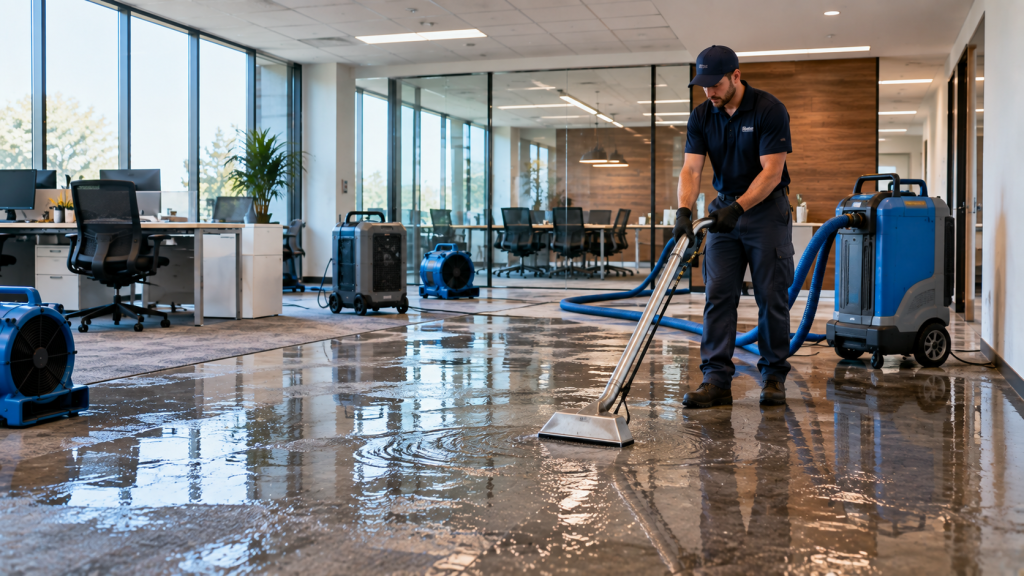
Extraction planning in a commercial property considers:
- How deep and how widespread the water is, and where it can drain.
- The flooring types present, such as carpet tile, resilient flooring, wood or concrete.
- Whether the water may be contaminated, which affects how it is handled and what protective measures are needed.
- Whether the space is occupied and how noise, hoses and equipment will affect neighboring areas.
Extraction does not end the job. It starts the drying process.
How Hidden Moisture Is Found: Moisture Mapping
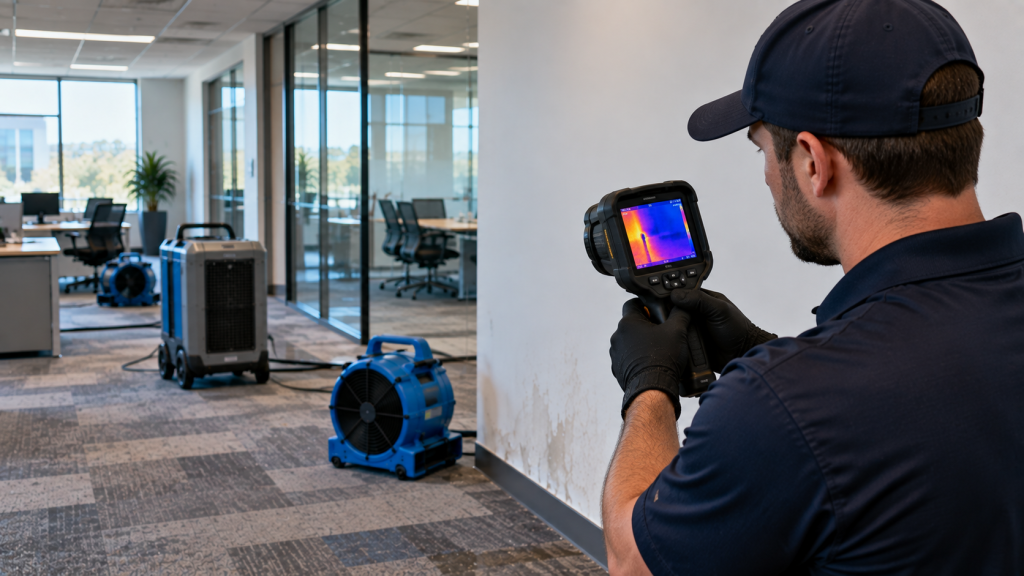
Commercial moisture mapping is the process of measuring and recording moisture across the affected area. Technicians use moisture meters, and often thermal imaging, to check walls, floors, ceilings and other materials, then note the readings by location. The result is a picture of where the water went, not just where it was seen.
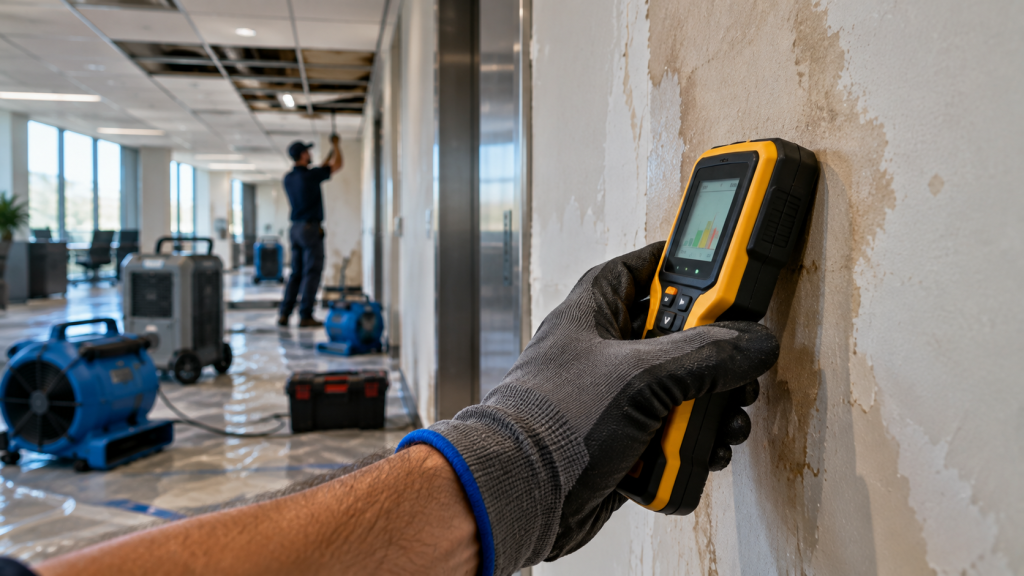
Why mapping matters
- It identifies wet areas that cannot be seen from the surface.
- It defines the boundaries of the affected area, which helps set the scope.
- It provides a baseline for measuring drying progress.
- It documents conditions for owners, tenants and insurers.
What is measured
Readings can include the moisture content of building materials, temperature and relative humidity of the air, and other atmospheric conditions. Meters and techniques differ by material, so interpretation requires training and judgment.
Air Movement, Dehumidification and Structural Drying
Drying works by getting moisture out of materials and then out of the air. That takes two things working together.
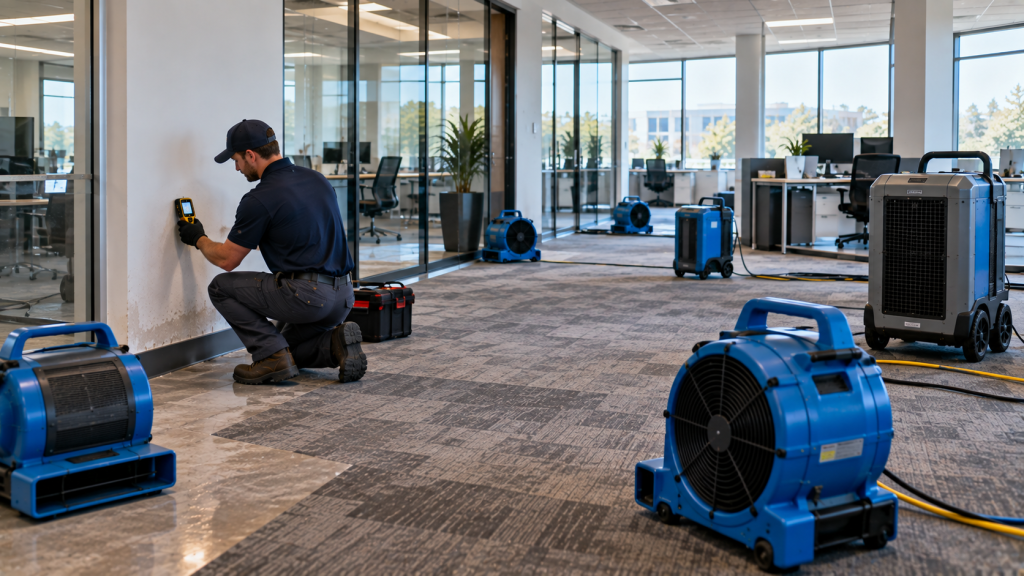
Air movement
Air movers direct airflow across wet surfaces to help moisture evaporate from materials. Their placement depends on the layout, the materials and how the space is used.
Dehumidification
Evaporated moisture goes into the air. Dehumidifiers remove that moisture so the air can keep taking more from the materials. Without dehumidification, humidity rises and drying slows down. Different equipment types suit different conditions.
Targeted drying of cavities and assemblies
Where moisture is trapped behind walls, under flooring or above ceilings, drying may involve creating access, such as small openings, or using specialized systems to move air through the cavity. Whether a material can be dried in place or has to be removed depends on the material, the type of water and the conditions.
Controlling the drying environment
Doors, HVAC settings and containment barriers may be adjusted to focus drying where it is needed and keep moisture from spreading to dry areas.
Monitoring, Documentation and Drying Verification
Drying is monitored, not assumed. Technicians typically return to take readings, adjust equipment and record progress. Monitoring shows whether materials are trending toward acceptable levels and whether equipment needs to move or change.
Drying is considered complete when measurements show conditions have reached appropriate targets for the materials involved, not after a set number of days. This is why no honest provider can promise a specific drying time before evaluating the property. Documentation typically includes readings over time, equipment records and notes on decisions made.
Drying time depends on the amount of water, the materials, the building’s systems, indoor conditions and how the project is staged. Treat any fixed promise with caution.
What Happens After the Water Is Extracted
Once bulk water is gone, evaluation begins. Materials are assessed to determine whether they can be dried in place, cleaned or need to be removed. Some materials, such as concrete, generally tolerate drying well. Others, such as insulation or certain ceiling tiles, may be difficult or impractical to dry. These are judgments made for each project and each material, not general rules.
Removal may be considered when materials are contaminated, cannot be dried effectively or block access to moisture. Cleaning, restoration planning and any reconstruction follow drying. See the recovery process guide for the complete sequence.
Drying in Occupied Commercial Spaces
Drying equipment produces noise, heat and airflow, and needs power and space. In occupied buildings, planning can address:
- Noise limits and working hours, including after-hours or weekend work where practical.
- Containment to limit airflow, dust and moisture between work areas and open spaces.
- Cord and hose routing that keeps exits and walkways clear.
- Electrical capacity for equipment, coordinated with building engineers.
- Security, access and safety rules for tenants and staff.
Some projects proceed in phases so the business can keep operating. Others require areas to be closed. The right approach depends on the property and the conditions. See restoration by commercial property type for how this varies.
QUESTIONS
Extraction and Drying FAQs
Moisture is measured and mapped, drying equipment is set up, and progress is monitored. Materials are evaluated to decide what can be dried in place, what needs cleaning and what may need to be removed.
With moisture meters, thermal imaging and other tools, technicians measure walls, floors and ceilings and record readings by location. This shows moisture that is not visible.
Moisture mapping records moisture readings across the affected areas so the extent of the water damage is known and drying progress can be tracked against a baseline.
Materials can hold moisture after water is removed. Structural drying brings them toward acceptable moisture levels and helps reduce the chance of ongoing problems from lingering moisture.
It varies with the amount of water, the materials, the building and the conditions. Drying is verified by readings, and no fixed timeframe applies to every project.
No one can guarantee that. Prompt, thorough drying reduces moisture conditions that support microbial growth, but outcomes depend on many factors. If mold concerns arise, a qualified professional must evaluate the property.
Discuss Your Water Extraction and Drying Needs
Organize what you know about the water source, affected areas and occupancy so an assessment can be planned accurately.