Home › Flood Restoration
LARGE-SCALE WATER INTRUSION
Commercial Flood Damage Restoration and Large-Scale Water Intrusion
Commercial flooding is not the same as a burst pipe. Learn how flood-related water intrusion differs from other water losses, why contamination and building conditions change the response, and how large-scale recovery is approached.
What Commercial Flooding Involves
Commercial flood damage restoration addresses water that enters a building from outside or in large volumes, often across many rooms or floors. Unlike a contained plumbing leak, flood-related intrusion can involve large quantities of water, carry soil, debris and contaminants, and affect structure, systems and contents at the same time.
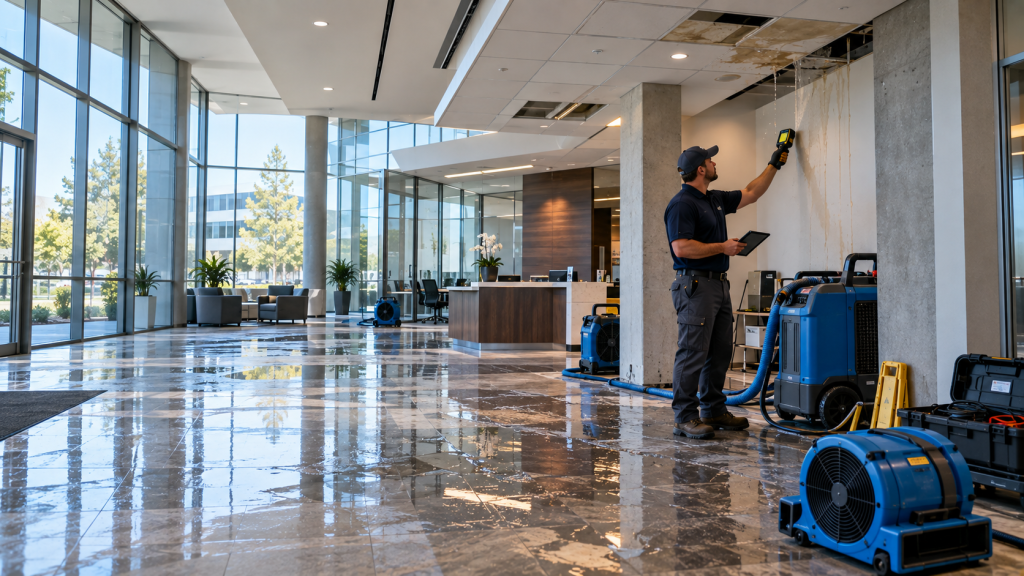
Not every flood situation has the same restoration requirements. The water source, depth, duration, building type and materials all influence what is needed. Where the event was declared a disaster or involves government or utility action, additional rules and priorities may apply.
Common Sources of Flood and Water Intrusion
- Heavy rainfall: more water than drainage can handle, leading to ponding and entry at doors and low points.
- Storm-related intrusion: wind-driven rain entering through damaged roofs, windows and walls.
- Overflowing waterways: rivers, creeks or drainage channels rising above their banks.
- Groundwater intrusion: water rising through floors, slabs and basements.
- Roof failures: collapsed or failed roofing, clogged roof drains and ponding on flat roofs.
- Drainage problems: blocked storm drains, failed sump pumps and municipal system backups.
- Plumbing and system failures: large releases from main lines, fire suppression or equipment that flood large areas.
Knowing the source helps determine what kind of water is present and how it should be handled.
How Flood Damage Differs From Other Water Losses
Water quality and contamination
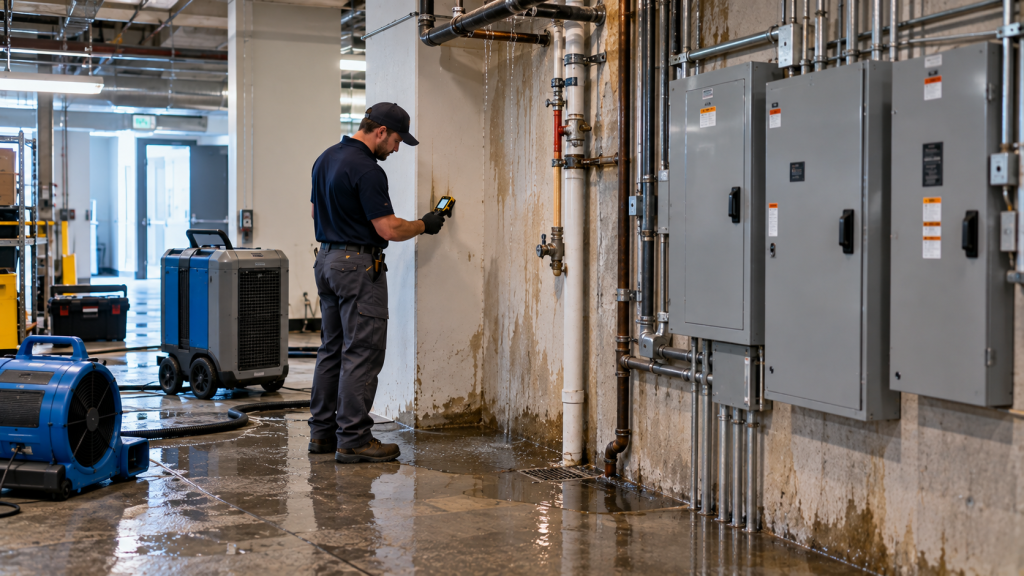
Floodwater from outside a building can carry sediment, chemicals, sewage and other contaminants. Water from a clean supply line is different. The restoration industry classifies water by its level of contamination, and the classification affects the response, protective equipment and decisions about which materials can be cleaned and which must be removed. Classification and cleaning decisions should be made by qualified professionals at the property.
Scale and access
Flooding often affects entire floors or sites and may limit access to the property. Utilities, roads and surrounding infrastructure can be affected, which influences timing and logistics.
Building conditions
Prolonged water exposure can affect flooring, wall assemblies, insulation, electrical and mechanical equipment and structural components. Assessing whether a building is safe to enter or occupy is a matter for qualified professionals and local authorities. This site cannot make that determination.
Duration
Water that has been present longer generally means more absorption into materials, so evaluation and scope can change.
How Large-Scale Flood Recovery Is Approached
Every project differs, but recovery generally follows a sequence.
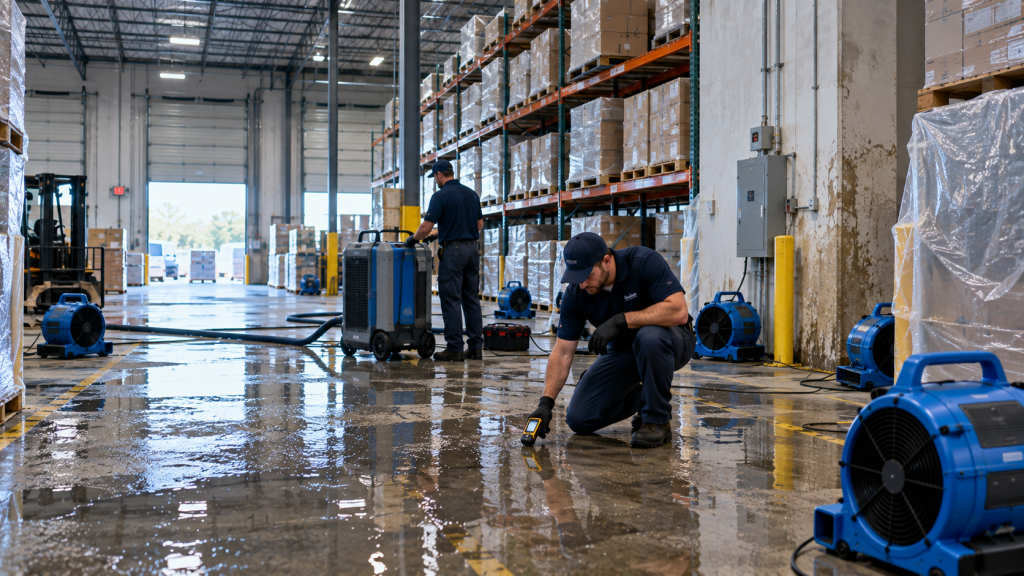
- Safety review: confirm the property can be entered and identify electrical, structural and contamination concerns with qualified professionals.
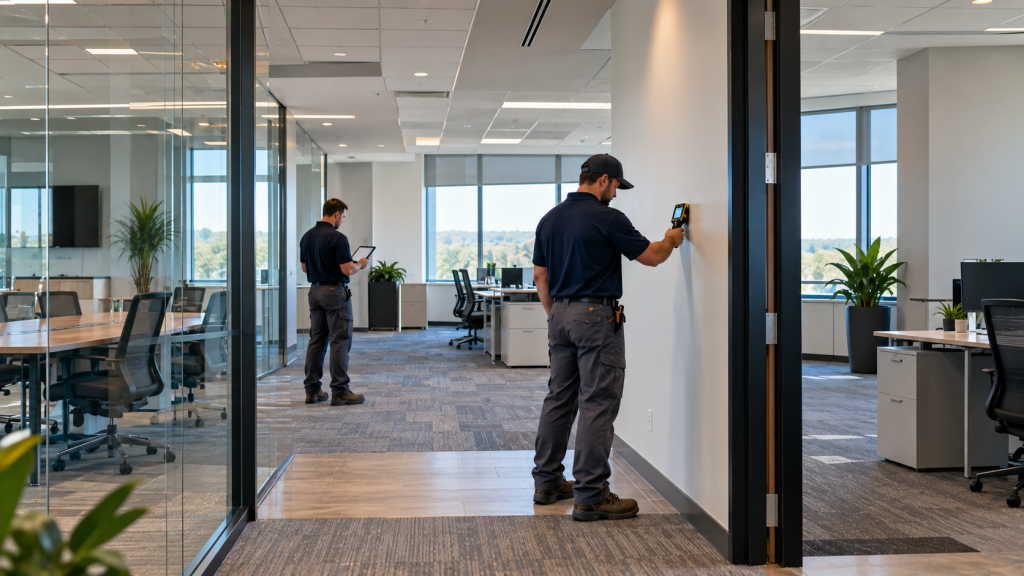
- Assessment and scoping: determine the water source and extent, affected materials and building systems.
- Water removal: extract standing water and remove debris where appropriate.
- Removal of affected materials: materials that cannot be safely cleaned or dried may need to be removed.
- Cleaning and drying: clean surfaces and dry the structure, with moisture monitoring. See extraction and drying.
- Evaluation and planning: decide what can be restored and what requires reconstruction.
- Reconstruction coordination and return to operations.
Large events may involve phasing, temporary services and coordination among many contractors, so scheduling and communication become central tasks.
Planning, Documentation and Insurance Questions
Thorough records are especially important after a flood. Photograph and video the water line, damage and contents before cleanup, keep a log of dates and actions and retain receipts for emergency work.
Insurance for flood is often handled differently from other water losses, and coverage varies by policy and by cause. Do not assume coverage either way. Ask your insurer or broker what applies to your policy and what the claim process requires.
Owners of multi-tenant buildings should also coordinate with tenants about access, contents and schedules, and check lease and landlord responsibilities.
QUESTIONS
Commercial Flood Restoration FAQs
Floodwater may carry contaminants and affect large areas, so the response considers water quality, building conditions and scale in addition to drying.
That must be determined by qualified professionals and local authorities. Electrical, structural and contamination hazards can exist. Do not enter areas where water contacts electrical equipment.
It depends on the material, the type of water and how long it was wet. Some materials can be cleaned and dried, and others must be removed. Each decision is made on evaluation, not as a general rule.
There is no standard timeframe. Scale, contamination, drying needs and reconstruction scope all affect the schedule.
Coverage depends on the policy and the cause of the water. Contact your insurance carrier or broker to learn what applies.
Talk Through Your Flood Recovery
Bring together the facts about the water source, affected areas and property use to plan a recovery that fits the conditions.