Home › Property Types
PROPERTY-SPECIFIC PLANNING
Commercial Water Damage Restoration by Property Type
The same water source can mean very different restoration plans in an office, a restaurant or a hospital. See how occupancy, contents, systems and operations shape drying, access and reopening for eleven commercial property types.
Why Property Type Changes the Plan
Water behaves the same way everywhere, but buildings do not. Property type affects who is present, what is at risk, which systems must keep running, how work can be staged and how quickly the space must reopen. Planning questions that recur across all types include:
- Who occupies the space, and can they stay?
- What contents, equipment or records are sensitive to moisture?
- Which building systems are involved, and can they be shut down?
- How can crews and equipment get in and out?
- Which areas are critical to reopen first?
The sections below address each property type. They describe common considerations, not guarantees or universal procedures.
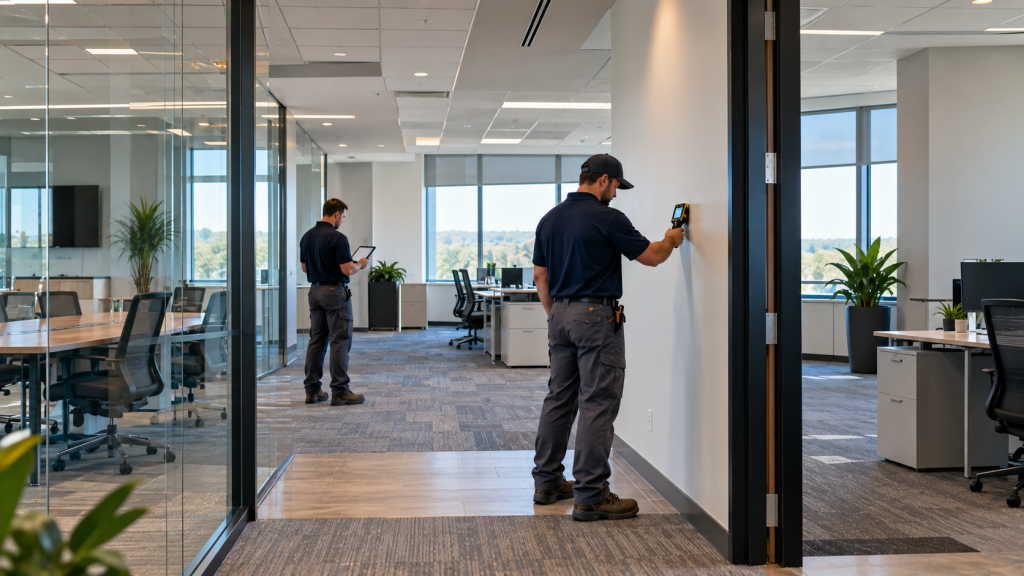
Offices
Common scenarios: ceiling leaks from upper floors, sprinkler or plumbing failures, HVAC condensate and roof leaks.
Sensitive items: computers, servers, network equipment, paper records and shared building systems.
Planning considerations: Suspended ceilings, carpet tile and gypsum walls can be affected across several tenants. Access can involve elevators, shared corridors and multiple occupants. After-hours work may reduce disruption. Continuity concerns include displaced staff, remote-work arrangements and data protection.
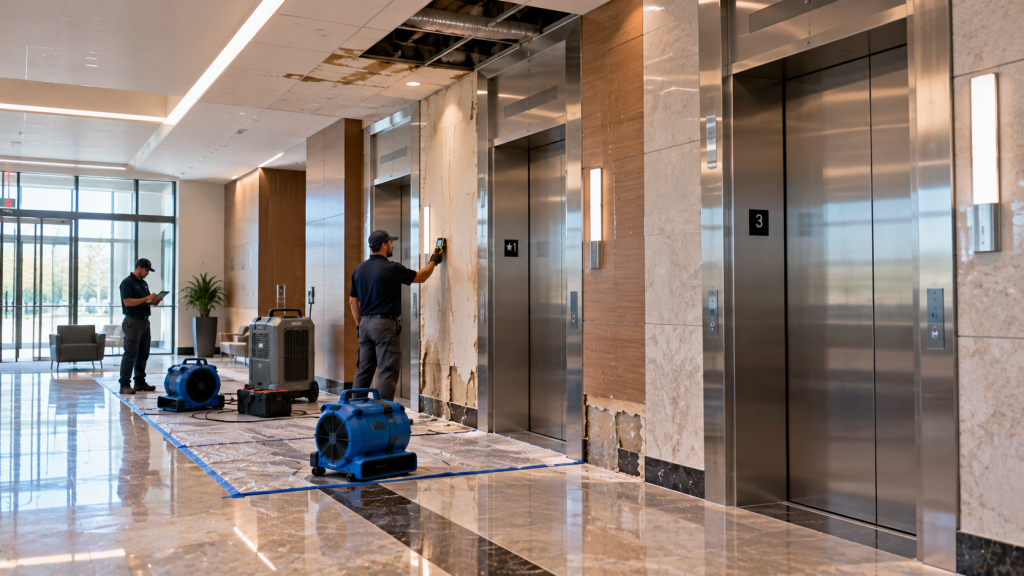
Retail Stores
Common scenarios: roof leaks, sprinkler discharge, plumbing failures in shared walls and flooding at entrances.
Sensitive items: merchandise, displays, point-of-sale equipment and fixtures.
Planning considerations: Inventory handling and protection are often central. Retail spaces have open floors and public access, so work areas must be secured. Customer-facing appearance matters, and shopping centers may have landlord and neighboring tenant requirements. Continuity concerns include lost sales, seasonal deadlines and the ability to open partial areas.
Restaurants
Common scenarios: kitchen plumbing and drain backups, grease trap issues, dishwasher or ice machine leaks and roof or hood-related leaks.
Sensitive items: food inventory, refrigeration, cooking equipment and stainless steel and tile surfaces.
Planning considerations: Food safety and health department requirements can apply. Sanitation and cleaning expectations are high. Kitchen equipment and gas or electrical connections need qualified handling. Reopening may require inspection or approval by local authorities. Continuity concerns include perishable stock and lost service days.
Hotels
Common scenarios: supply line failures in guest rooms, leaks that travel between stacked rooms, sprinkler discharges and roof or exterior wall intrusion.
Sensitive items: guest belongings, furnishings, bedding, carpet and in-room systems.
Planning considerations: Water can move vertically through multiple floors. Rooms may be taken out of service individually or in blocks. Guest disruption, noise and safety matter. Continuity concerns include room inventory, bookings and brand standards.
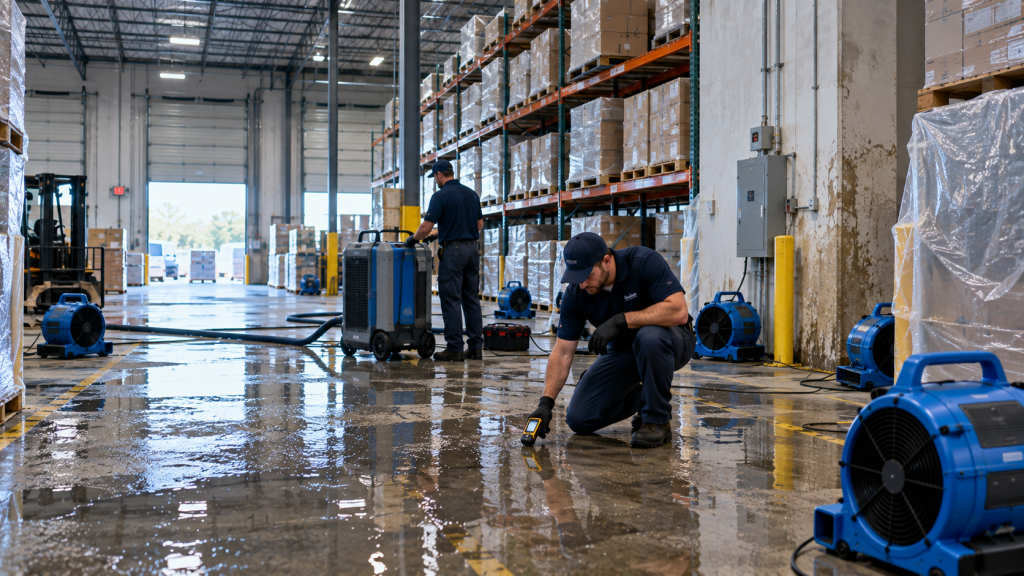
Warehouses
Common scenarios: roof leaks, sprinkler discharge, drainage failures, floodwater at dock doors and slab moisture.
Sensitive items: stored inventory, racking, packaging, pallets and forklifts and other equipment.
Planning considerations: Large open volumes, high ceilings and concrete slabs change how drying is planned. Palletized goods and cardboard packaging absorb water. Access for trucks and forklifts must be maintained or managed. Continuity concerns include shipping schedules, stock movement and customer commitments.
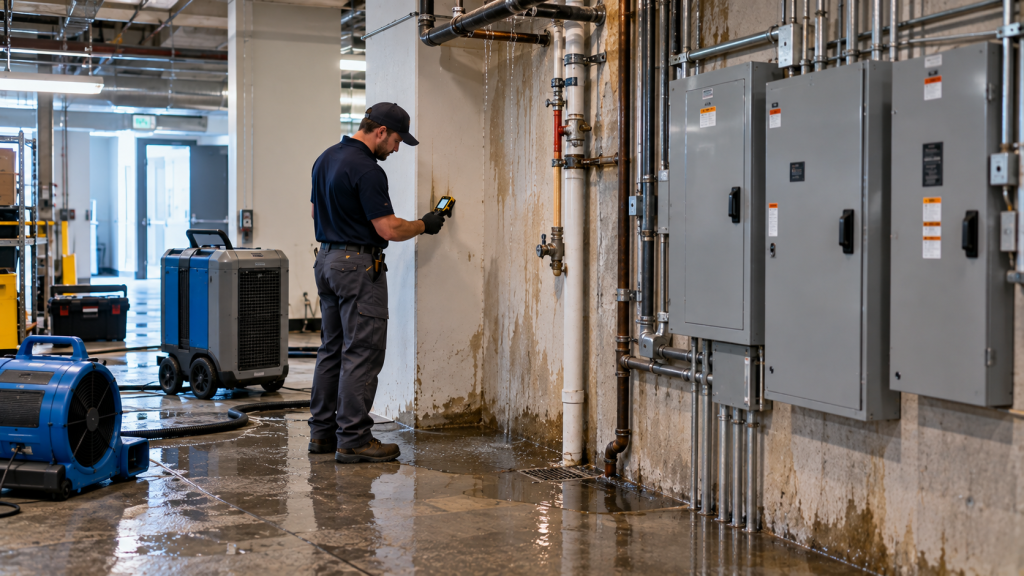
Industrial Facilities
Common scenarios: process water and cooling system leaks, roof failures, drainage problems and storm intrusion.
Sensitive items: production equipment, controls, electrical gear, materials and chemicals.
Planning considerations: Safety programs, lockout procedures and site rules apply. Machinery and control systems may need specialist involvement. Hazardous materials require qualified handling. Continuity concerns include production downtime, supply chain effects and equipment recovery.
Medical Facilities
Common scenarios: plumbing and sterilization equipment leaks, roof intrusion, sprinkler discharge and drain backups.
Sensitive items: patient areas, medical equipment, records, pharmaceuticals and controlled environments.
Planning considerations: Infection control, patient safety and regulatory requirements strongly shape the plan, and facility infection-control staff are typically involved. Containment and air handling need careful attention. Reopening of clinical areas may require approvals. Continuity concerns include patient care, scheduling and relocation of services.
Multifamily Properties
Common scenarios: unit-to-unit leaks, supply and drain failures, roof leaks and sprinkler discharge.
Sensitive items: residents’ belongings, shared walls, ceilings and common areas.
Planning considerations: Water can affect several units and common spaces. Resident notification, access rules and lease terms matter. Temporary relocation may be considered. Continuity concerns include resident safety, communication and turning units back to service.
Mixed-Use Buildings
Common scenarios: leaks from residential floors into commercial spaces below, shared plumbing and roof issues.
Sensitive items: a mix of residential, retail and office contents.
Planning considerations: Different occupants have different needs and responsibilities. Coordination among owners, tenants and residents is central. Access and work hours may need to satisfy several parties. Continuity concerns include which uses can continue and who is responsible for which areas.
Educational Properties
Common scenarios: roof leaks, plumbing failures, sprinkler discharge and flooding in lower levels.
Sensitive items: classrooms, libraries, labs, technology and student records.
Planning considerations: Student and staff safety rules govern access. Work is often planned around school calendars, and summer or break periods may allow larger scopes. Continuity concerns include class schedules, relocation of classes and exam periods.
Commercial Campuses
Common scenarios: events affecting several buildings, site drainage issues, storm intrusion and shared utility failures.
Sensitive items: many buildings, tenants and systems at once.
Planning considerations: Prioritizing buildings becomes a project in itself, and central coordination, communication and resource scheduling matter. Continuity concerns include which buildings and functions are most critical and how to sequence recovery.
For step-by-step coordination, see the recovery process guide, and for events involving rising water, flood restoration. For urgent situations see emergency response.
QUESTIONS
Property Type FAQs
Any of them. Offices, retail, restaurants, hotels, warehouses, industrial sites, medical facilities, multifamily, mixed-use, educational properties and campuses all face water risks.
Work is planned around occupants through containment, scheduling, access control and phasing. What is possible depends on safety and the extent of damage.
Occupancy, contents, systems and operating needs vary by property, and they determine priorities, access, equipment and reopening steps.
Plan Restoration Around Your Property
Share your property type, occupancy and operational priorities so restoration planning starts with the right questions.