Home › Request Assistance
CONTACT AND PROJECT PREPARATION
Request Commercial Water Damage Restoration Assistance
A restoration conversation goes faster and produces a better plan when it starts with clear facts about the property, the water and your timeline. Use this page to organize them.
Before You Reach Out
If anyone is in danger, call 911 first. Electrical hazards, gas odors, sagging ceilings, structural concerns, injuries or people in flooded areas are matters for emergency responders. Property protection always comes second to human safety.
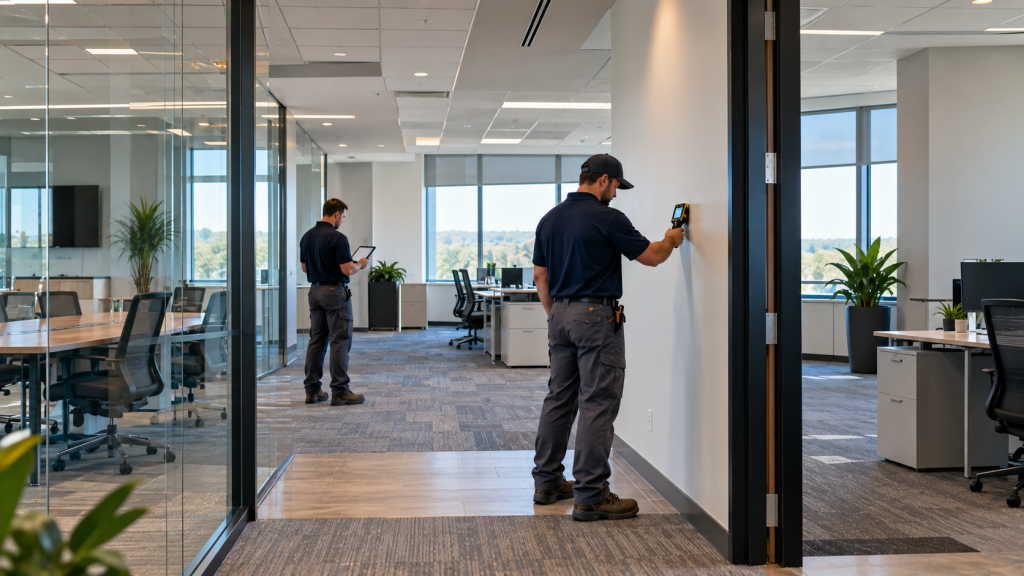
If the situation is safe, the most useful step is to collect the basic facts. Restoration professionals, insurers and building managers ask similar questions, and having the answers ready leads to a more accurate assessment.
Information to Gather
You do not need everything on this list to get started. Share what you know.
- Property details: type of property, number of floors, approximate size and location.
- Your role: owner, property manager, tenant, facility manager or other.
- Water source: the known or suspected cause and whether it has been stopped.
- Timeline: when the water was discovered and when it was controlled.
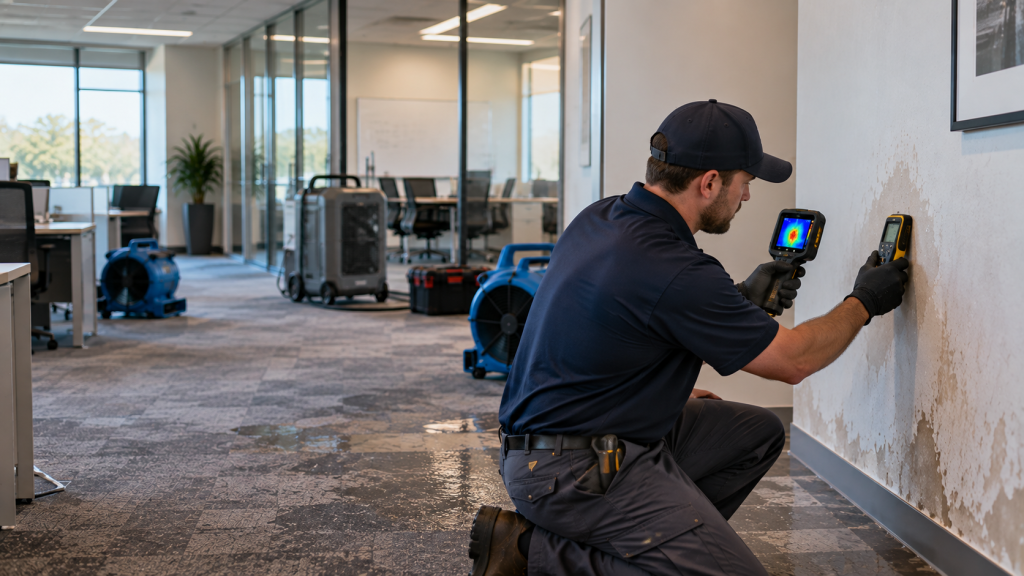
- Affected areas and materials: rooms, floors, ceilings, walls, flooring and equipment involved.
- Work already done: extraction, drying, demolition or temporary protection, and who performed it.
- Occupancy: whether the building is occupied and whether operations must continue.
- Insurance and approvals: whether the loss has been reported, and any landlord or property manager requirements.
- Documentation: photographs, video, moisture readings and notes.
- Goals and deadlines: reopening dates, phasing needs and lease or event deadlines.
Find the Right Guide for Your Situation
Water is active or hazards exist: read emergency commercial water damage restoration.
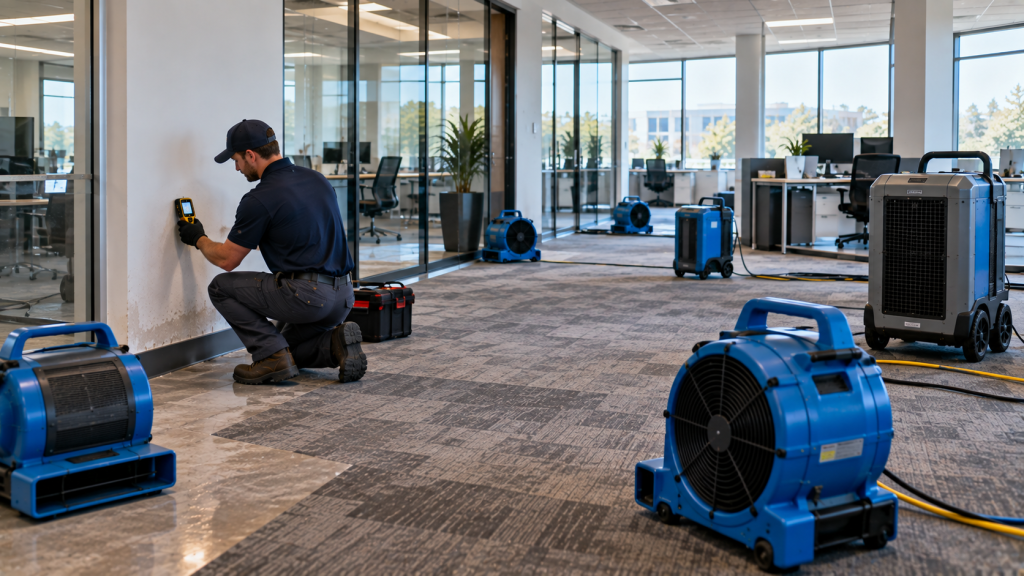
Water is removed and drying is next: see extraction and structural drying.
Flood or storm intrusion is involved: read commercial flood damage restoration.
You need property-specific planning: see restoration by property type.
This website is an informational resource. It does not provide legal, insurance, engineering, electrical or safety advice, and it cannot evaluate conditions at your property.
QUESTIONS
Frequently Asked Questions
Property type and location, the source and timing of the water, affected areas, whether the building is occupied and whether the loss has been reported. Photos and notes help a great deal.
No. Share what you know. A professional assessment helps establish the source and the extent of the damage.
Check your policy for reporting requirements and timelines, and speak with your insurer or broker about coverage. This site cannot advise on coverage.
Not Sure Where to Start?
The recovery process guide walks through assessment, drying, evaluation, reconstruction and return to operations.