Home › Emergency Response
FIRST HOURS
Emergency Commercial Water Damage Restoration: What Matters in the First Hours
When water is actively entering or spreading through a commercial building, the early decisions shape everything that follows. Here is how emergency commercial water damage restoration is typically approached, and what to keep safe, stop and document.
PRIORITY 01
What Makes a Water Loss an Emergency
A water loss is an emergency when water is still spreading, when people or critical operations are at risk, or when materials are being damaged faster than they can be protected. Time matters because water keeps moving into porous materials, and prolonged moisture makes drying and repair harder.
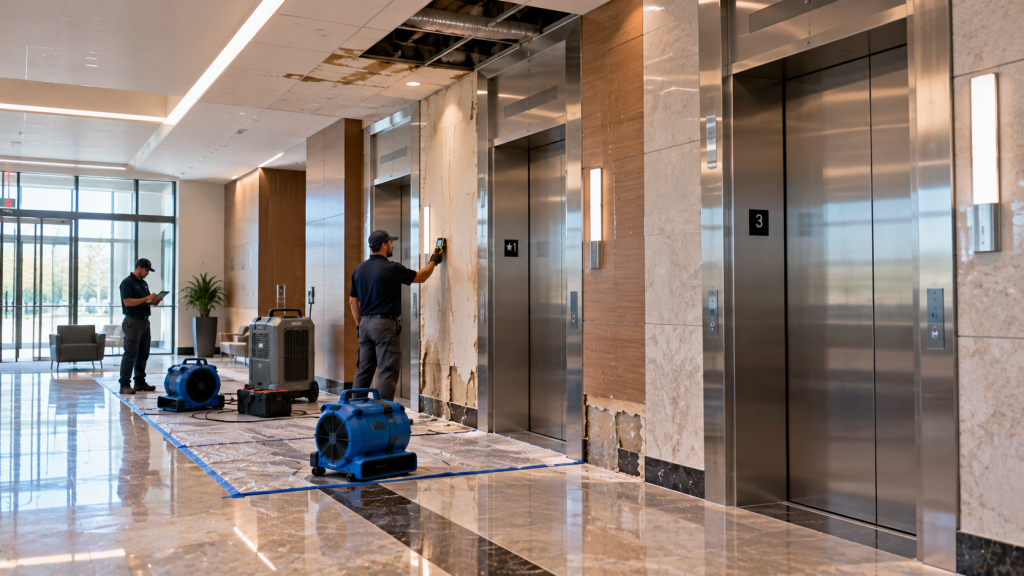
Typical emergency situations in commercial properties include:
- Burst pipes and plumbing failures that release large volumes quickly.
- Sprinkler discharges that soak ceilings, floors and contents across a wide area.
- Roof leaks during or after storms, often reaching ceilings, insulation and equipment below.
- HVAC and equipment leaks from condensate lines, chillers, boilers or water heaters.
- Water intrusion and commercial flooding through walls, doors, foundations or drains.
- Ceiling leaks and water migration through walls that spread across rooms or floors.
- Multi-room water losses where several spaces, or several tenants, are affected at once.
PRIORITY 02
Safety Comes Before Property
Protecting people always comes before protecting property. Before anyone works in or enters an affected area, consider the hazards.
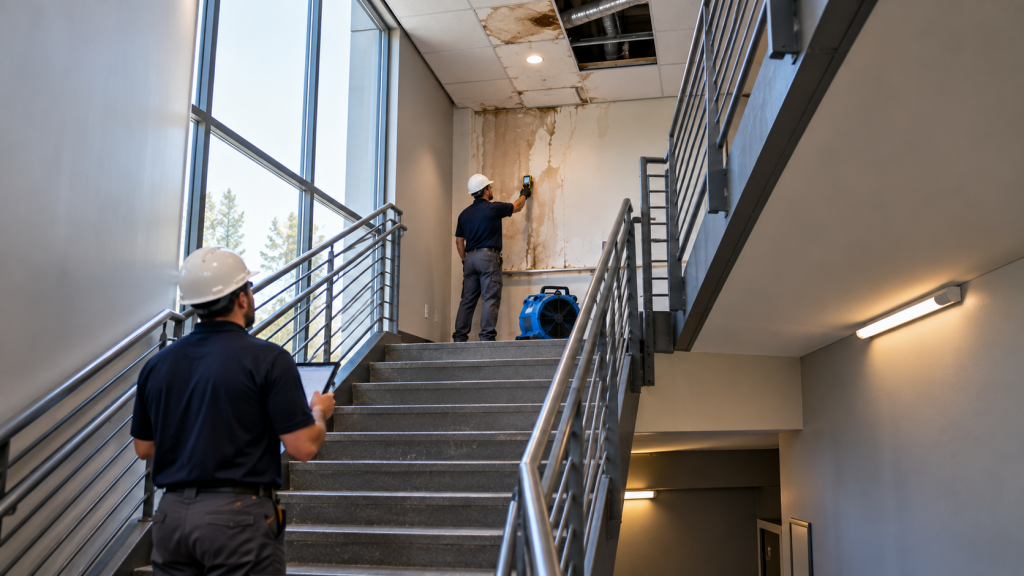
Electrical hazards. Do not enter areas where water may be in contact with outlets, panels, wiring, lighting or powered equipment. Do not touch electrical equipment while standing in water, and do not attempt electrical repairs or testing yourself. Leave power decisions to qualified electricians or the utility.
- Call 911 if there is any danger to people, a gas odor, smoke, visible sparking or a suspected structural concern such as a sagging ceiling.
- Keep people away from wet floors, which can be slippery, and from ceilings holding water.
- Do not assume water is clean. Water from sewers, rising floodwater or contaminated sources may pose health risks.
- Follow building management, fire safety and emergency-response instructions.
This site cannot make electrical, structural or environmental safety determinations. Those require qualified professionals at the property.
PRIORITY 03
Initial Considerations Once Conditions Are Safe
Source control
If it can be done safely, water should be stopped at its source. That might mean closing a shutoff valve, isolating a section of piping or having a sprinkler system controlled by the right personnel. Sprinkler and fire protection systems have life-safety roles, so shutdown decisions should involve the people responsible for them.
Notify the right people
Contact your property manager, building engineer or landlord as applicable, and decide who will coordinate with a restoration professional and, where appropriate, the insurer. Clear ownership of decisions prevents delay.
Protect what you can
If access is safe, move or cover inventory, records, electronics and furnishings out of the path of water. Do not move heavy or hazardous items unsafely.
Limit spread
Closing doors, blocking water pathways and keeping foot traffic out of wet areas can reduce tracking water and contamination into unaffected areas.
Call for professional assessment
A restoration professional can assess the water source, the affected areas and the scale of the response. They typically look for water that has traveled into walls, ceilings, insulation and under flooring.
PRIORITY 04
Occupied Buildings and Business Operations
Commercial water losses rarely happen in an empty building. Emergency planning has to account for the people and operations affected.
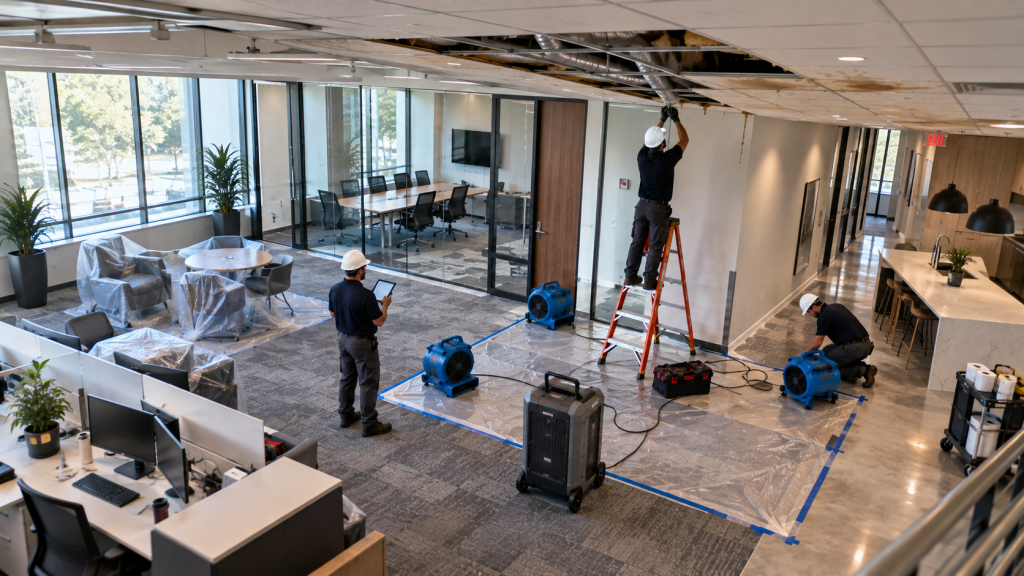
- Employees and tenants: where they can safely work, and how they will be told about closures or restricted areas.
- Inventory and equipment: what is at risk, what is critical and what needs to be relocated or protected first.
- Documents and data: paper records, servers and network equipment may need special handling.
- Access: loading docks, elevators, stairwells and security procedures for outside crews.
- Critical areas: spaces that must stay operating, such as those with refrigeration, patient care or point-of-sale systems.
- Phased restoration: whether work can proceed area by area so parts of the building keep running.
Discuss these priorities early. They determine the order of work as much as the water does.
PRIORITY 05
What to Document Right Away
Good records help with planning, communication and any insurance discussion. If it is safe to do so, capture:
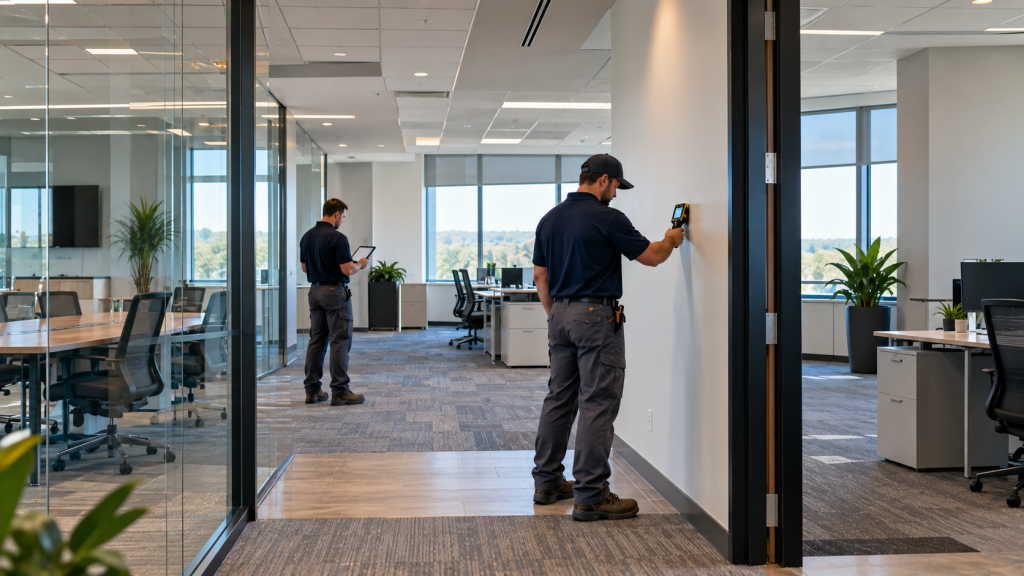
- Photographs and video of the affected areas and damaged contents, before anything is moved when possible.
- The time the water was discovered, where it came from and when it was stopped.
- Names of the people involved and any providers contacted.
- Lists of damaged inventory, equipment and furnishings.
- Notes on temporary measures already taken.
Coverage decisions depend on your policy and your insurer. Questions about coverage should go to the carrier, broker or agent.
PRIORITY 06
What Happens After the Emergency Response
Emergency mitigation is the beginning of restoration, not the end. Once standing water is addressed, the focus shifts to hidden moisture, drying and damage evaluation. Read commercial water extraction and drying to understand how moisture is found and dried, or follow the full recovery process from assessment to return to operations. If the event involved rising water or storm intrusion, see commercial flood damage restoration.
QUESTIONS
Emergency Water Damage FAQs
Make sure people are safe and away from electrical hazards. If it is safe, stop the water at its source, then contact building management and a qualified restoration professional. Photograph the damage and protect valuable contents if you can do so safely.
Electrical decisions should be made by qualified electricians or the utility. Do not enter wet areas near electrical equipment, and do not touch equipment while standing in water.
Possibly, depending on hazards and the extent of damage. Unaffected areas may be able to stay open if they can be protected and accessed safely. The decision should follow an on-site evaluation.
As soon as it is safe. Water continues to spread and to be absorbed into materials, so delays can increase the scope of the work. No specific response or drying time can be promised because every loss differs.
That depends on your policy and the insurer’s determination. Report the loss according to your policy requirements and document everything.
Get Help With Commercial Water Damage
Prepare the essential facts about the property, the water source and your timeline before you contact a restoration provider.