The Commercial Water Damage Recovery Process, Step by Step
Commercial water damage recovery runs from the first call to the day the space is back in use. Follow the thirteen stages most projects move through, and see where each one connects to the rest.
The steps below describe a typical sequence. Real projects vary. Some steps overlap, some are skipped and some repeat. Requirements depend on the property’s condition, the water source, affected materials, building systems, contamination considerations and project scope. Not every project needs every step.
Conditions must be evaluated at the property by qualified professionals. This guide is general information, not a project plan or a safety, structural, electrical or insurance determination.
STAGES
Stages 1 to 4: Contact, Assessment and Protection
01
Initial contact and situation review
The project starts with the facts: what happened, when, where, whether anyone is at risk, what the building is used for and what needs to keep running. Clear information here speeds up everything after it. See emergency response for the first-hour considerations.
02
Property assessment
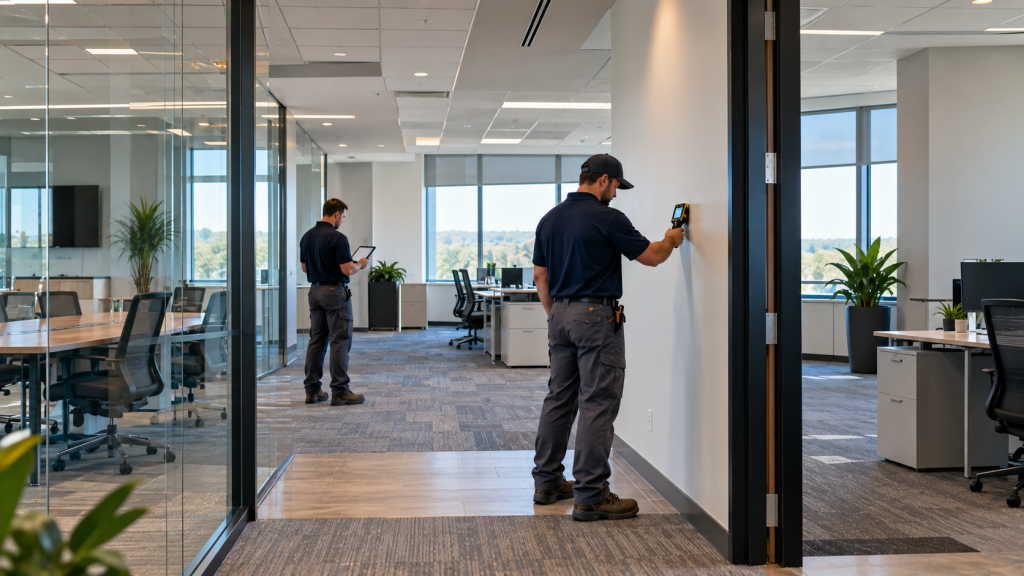
A professional assesses the affected areas, the type of water involved and the building’s condition. Safety hazards are identified before work begins.
03
Identify the water source and affected areas
Confirming that the source is controlled, and tracing how far water has traveled through floors, walls and ceilings, defines the scope. Water often migrates well beyond the visible damage.
04
Protect unaffected areas and consider operational priorities
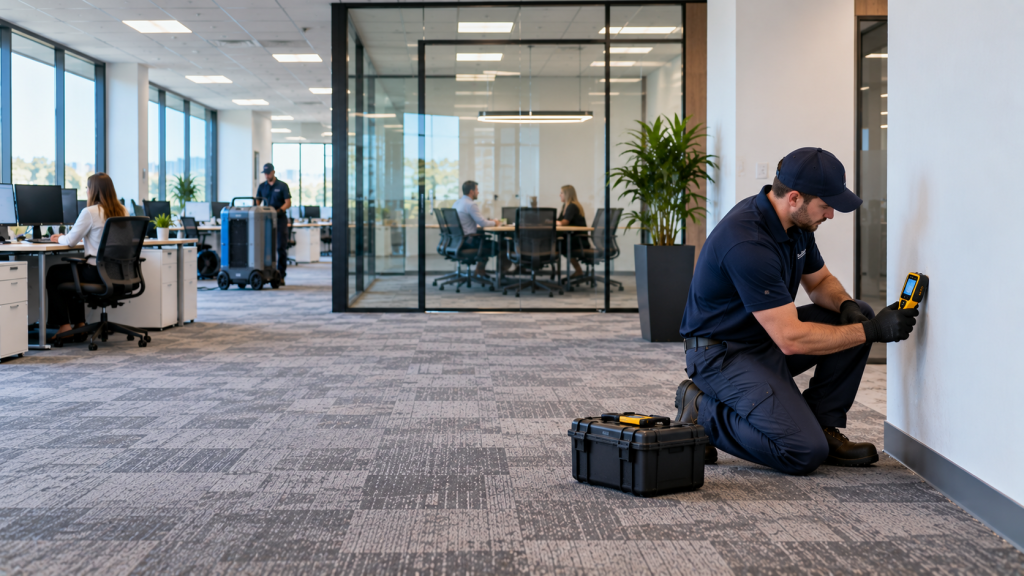
Barriers, protection and access planning keep dry areas dry and help operations continue where possible. This is when priorities such as critical rooms and reopening order are discussed.
STAGES
Stages 5 to 8: Extraction, Moisture and Drying
05
Water extraction
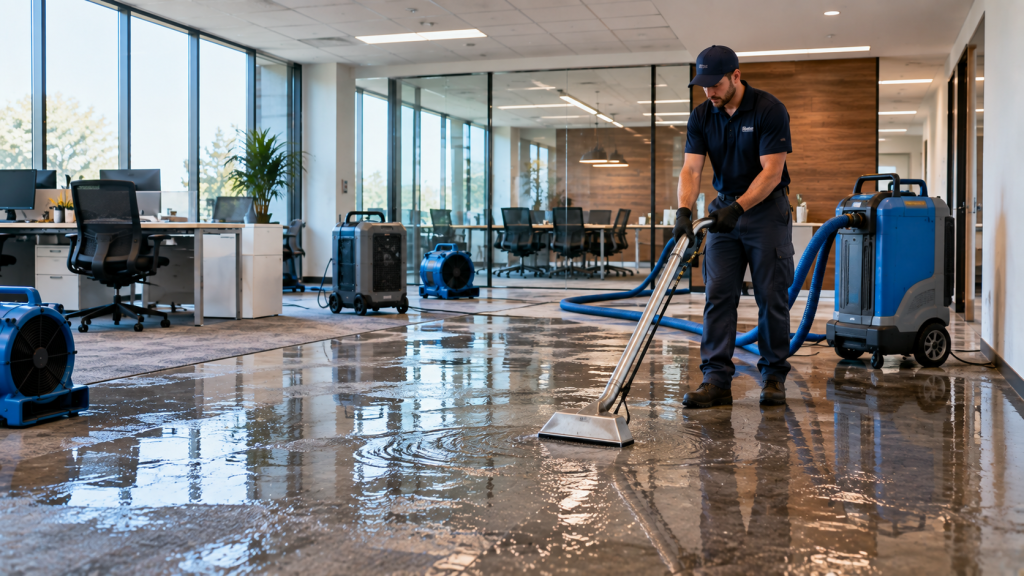
Standing water is removed to limit further absorption into materials.
06
Moisture mapping and evaluation
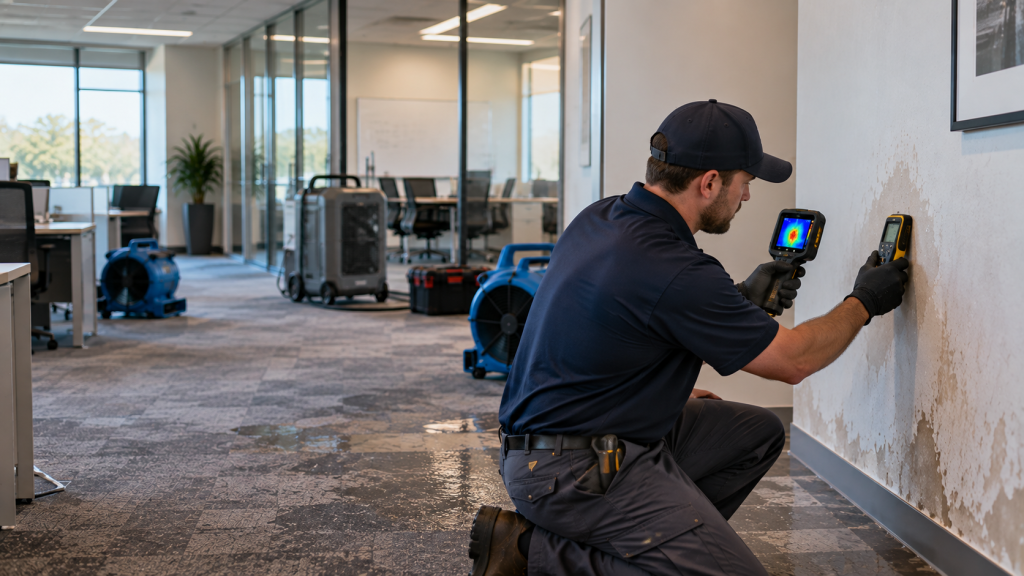
Moisture is measured and recorded by location to find hidden wet areas and set a baseline.
07
Structural drying
Air movement and dehumidification are used to dry structure and contents, with equipment placed and adjusted as conditions change.
08
Monitoring and documentation
Readings and equipment records are kept until measurements show materials have reached appropriate levels. Read more about stages 5 to 8 in commercial water extraction and drying.
STAGES
Stages 9 to 11: Evaluation, Cleaning and Reconstruction
09
Material and damage evaluation
Materials are evaluated to decide whether they can be dried in place, cleaned or need to be removed. These decisions depend on the material, the type of water and how long it was wet.
10
Cleaning and restoration planning
Surfaces and contents that can be cleaned are addressed, and a restoration scope is defined for repairs and finishes.
11
Reconstruction coordination, where applicable
If materials were removed or damaged beyond restoration, rebuilding may be needed. Coordination may involve contractors, design professionals, permits and schedules. Some restoration providers handle reconstruction, and others coordinate with separate contractors.
STAGES
Stages 12 and 13: Final Inspection and Return to Operations
12
Final inspection and property recovery
Final readings, walkthroughs and a punch list confirm the work is complete. Documentation is compiled for owners and, where needed, insurers.
13
Return to operations
Areas are handed back and normal operations resume, sometimes in phases. Plan for any follow-up checks or open items.
The property-type guide shows how this sequence changes for offices, retail, restaurants, warehouses, medical facilities and others.
What Makes the Process Go Smoothly
One point of coordination for decisions among owners, tenants, managers and contractors.
Written scope and clear change management so everyone understands what is included.
Documentation from the start, including photos, readings and daily records.
Realistic scheduling that accounts for drying, access limits and dependent trades.
Regular communication with occupants about access, noise and progress.
It depends on the extent of damage, drying needs and whether reconstruction is required. A minor loss may be resolved in days, while larger projects can take considerably longer. No fixed timeline applies to every project.
When materials must be removed or cannot be restored to an acceptable condition. Reconstruction ranges from replacing some finishes to rebuilding whole areas.